Context In early 2026, with AI disrupting many industries, I took a course in AI in UI/UX design at Stanford University. As part of my capstone project, I created an AI proof of concept to understand where AI is useful in the design process and where human judgment is needed. The project below is a medical documentation tool that uses AI to record and document conversations between a healthcare professional and a patient.
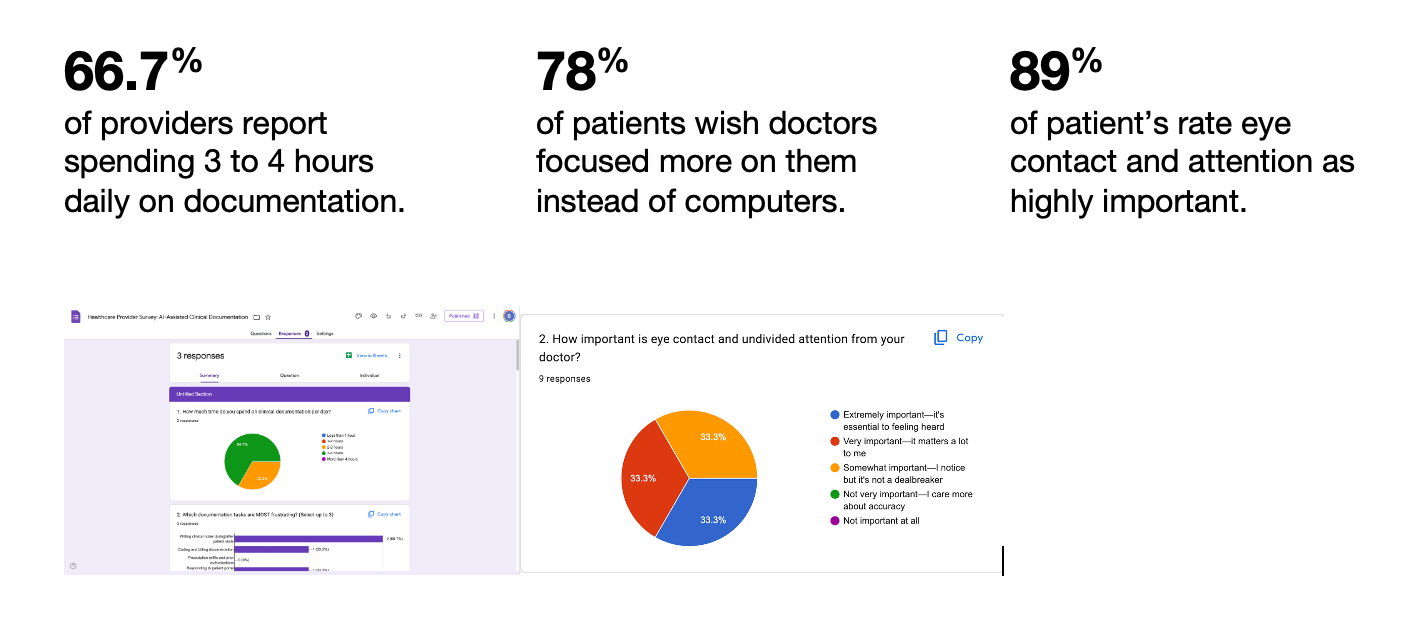
Healthcare providers spend a significant portion of their time documenting patient visits instead of treating patients. AI has the potential to assist with clinical documentation, but must be implemented carefully to preserve physician control, patient consent, and data security.
This project explores how AI can augment workflows for medical professionals by assisting with clinical charting.
Using modern AI tools, I built a functional prototype of an AI-powered medical scribe and tested whether AI could meaningfully accelerate the product design workflow itself. It was intentionally designed for desktop only, so that data doesn't travel outside of a controlled network on a mobile device.
Clinical charting requirements create several issues:
• Reduced patient interaction
• Physician burnout
• Delayed documentation
• Administrative overhead
Medical scribes can help, but they are expensive and difficult to scale.
AI offers a potential solution, but healthcare introduces strict ethical and privacy requirements.
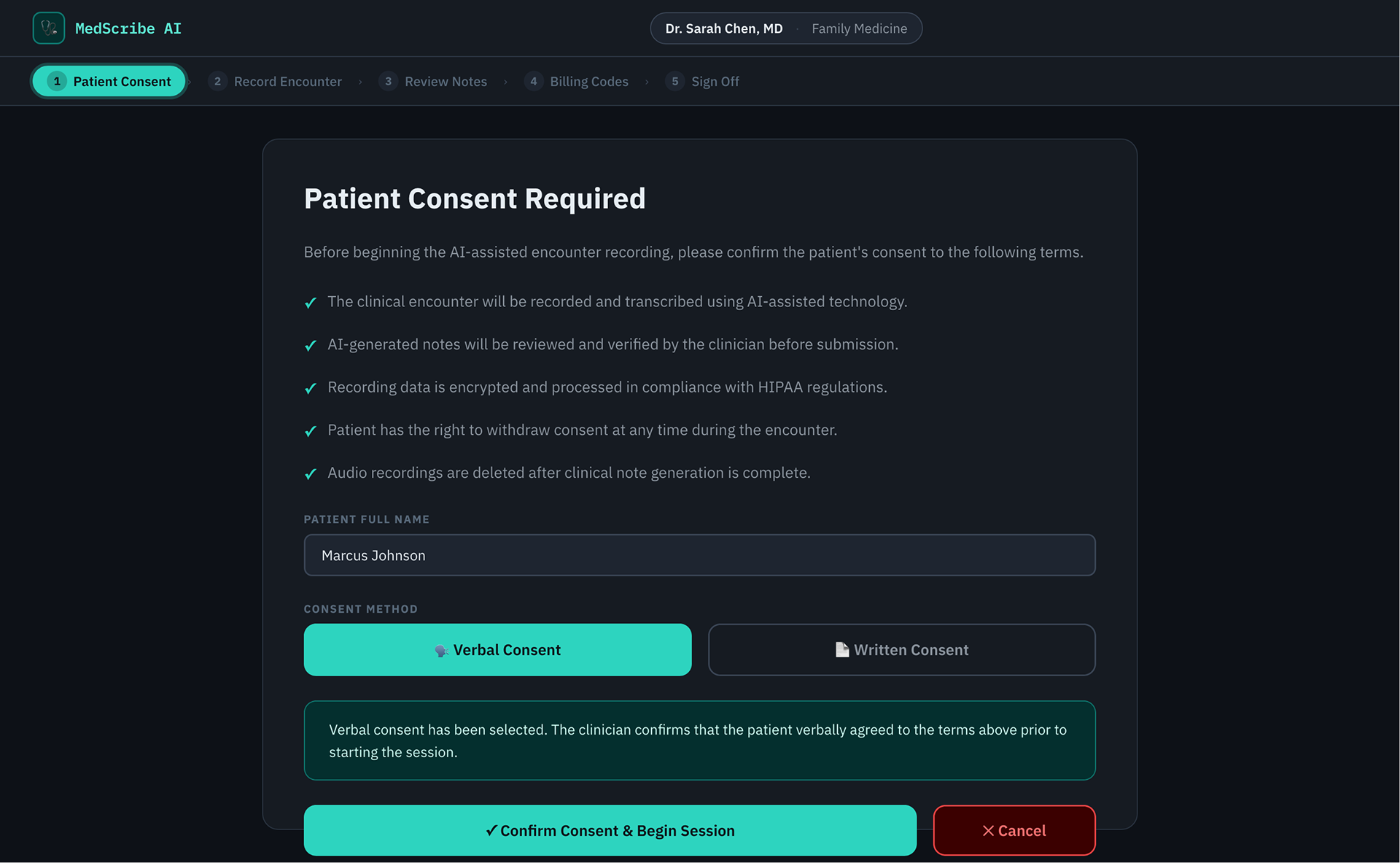
Results Achieved
4 hour prototype production. Reduced typical prototype development time from ~2 weeks to 4 hours
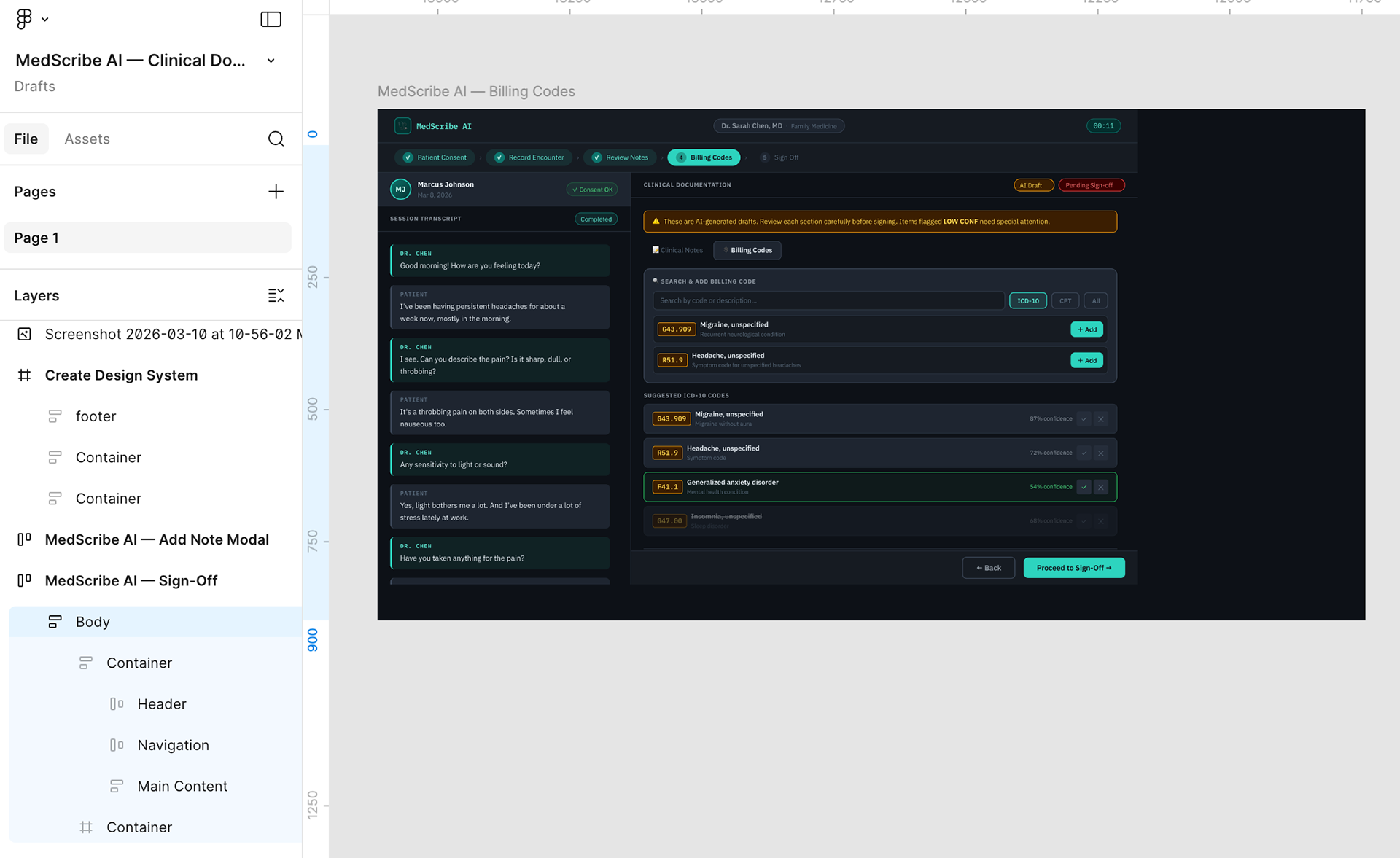
AI-assisted design pipeline using Claude, Claude Code, and Figma to generate and convert designs into editable UI prototypes.
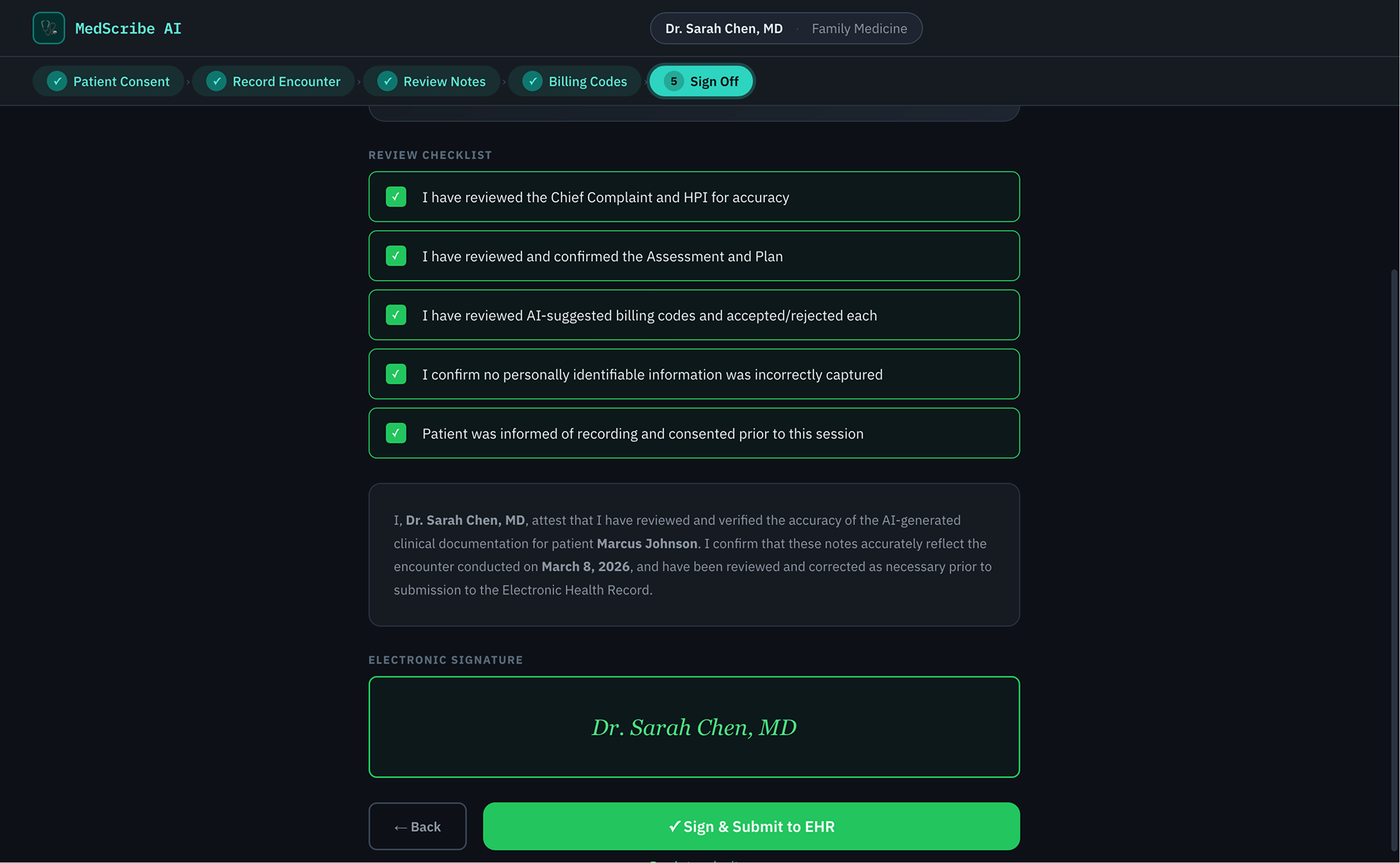
Ethics-first interaction model. Designed explicit patient consent flows and physician sign-off safeguards.
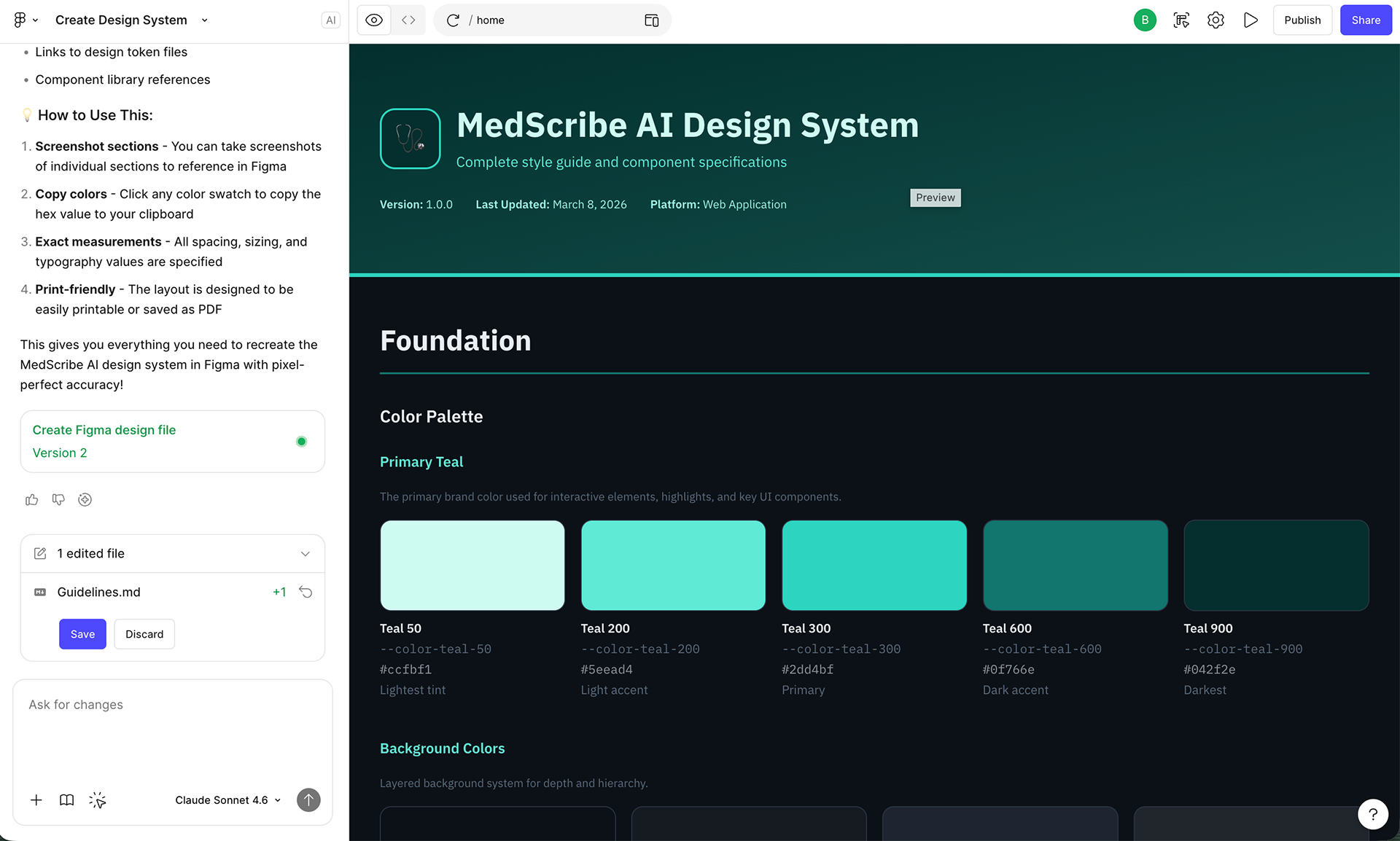
Production-ready structure. Figma components (including Auto-layout) created using Figma Make. Streamlined engineer handoff with potential to improve cross-functional collaboration.
My Role Product Designer, UX Researcher, AI Workflow Architect
Objectives
• Product concept development
• User research interviews
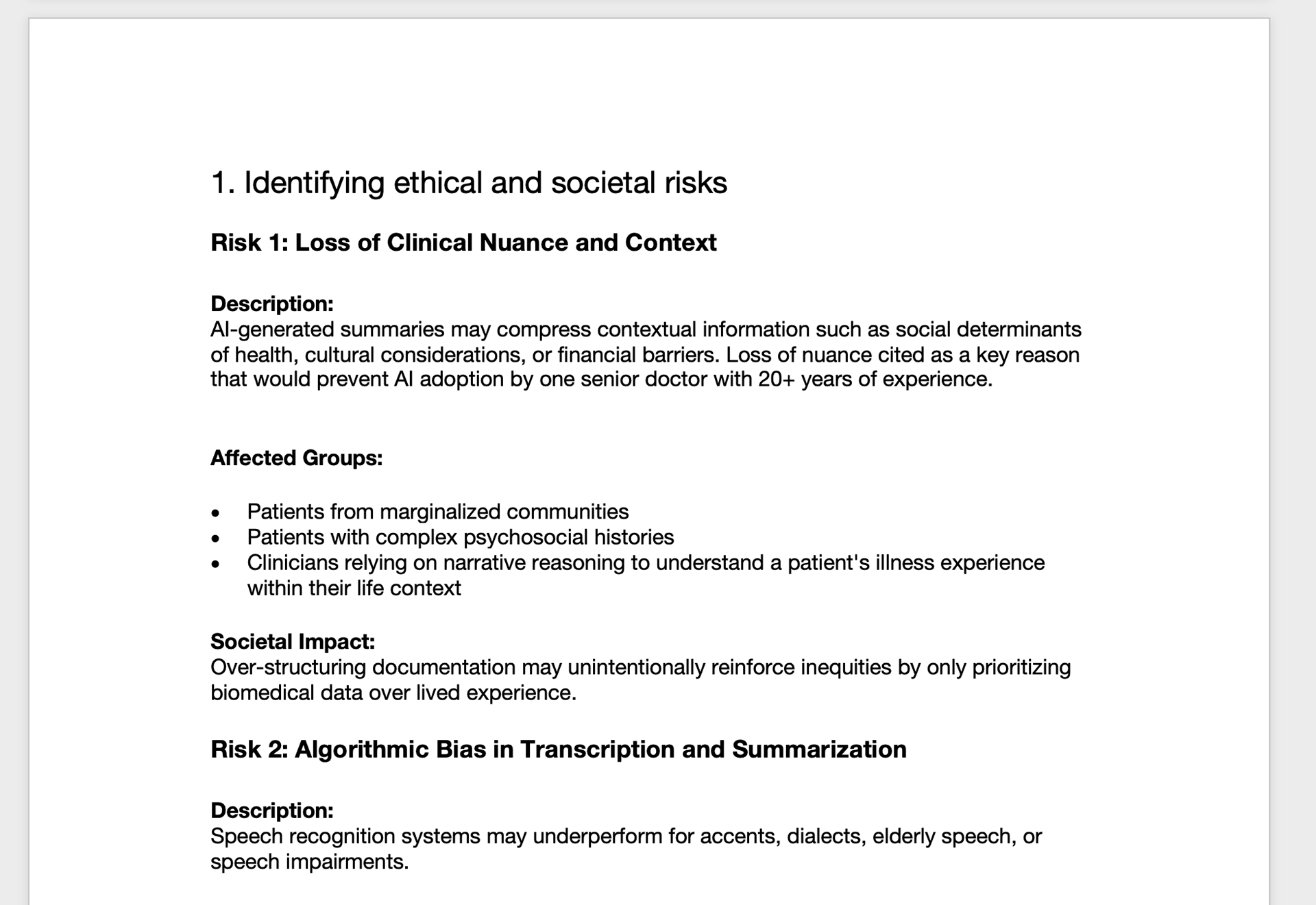
• Ethical design framework
• UX architecture
• AI-assisted prototyping workflow
• Interaction design
• Product concept development
• User research interviews
• Ethical design framework
• UX architecture
• AI-assisted prototyping workflow
• Interaction design
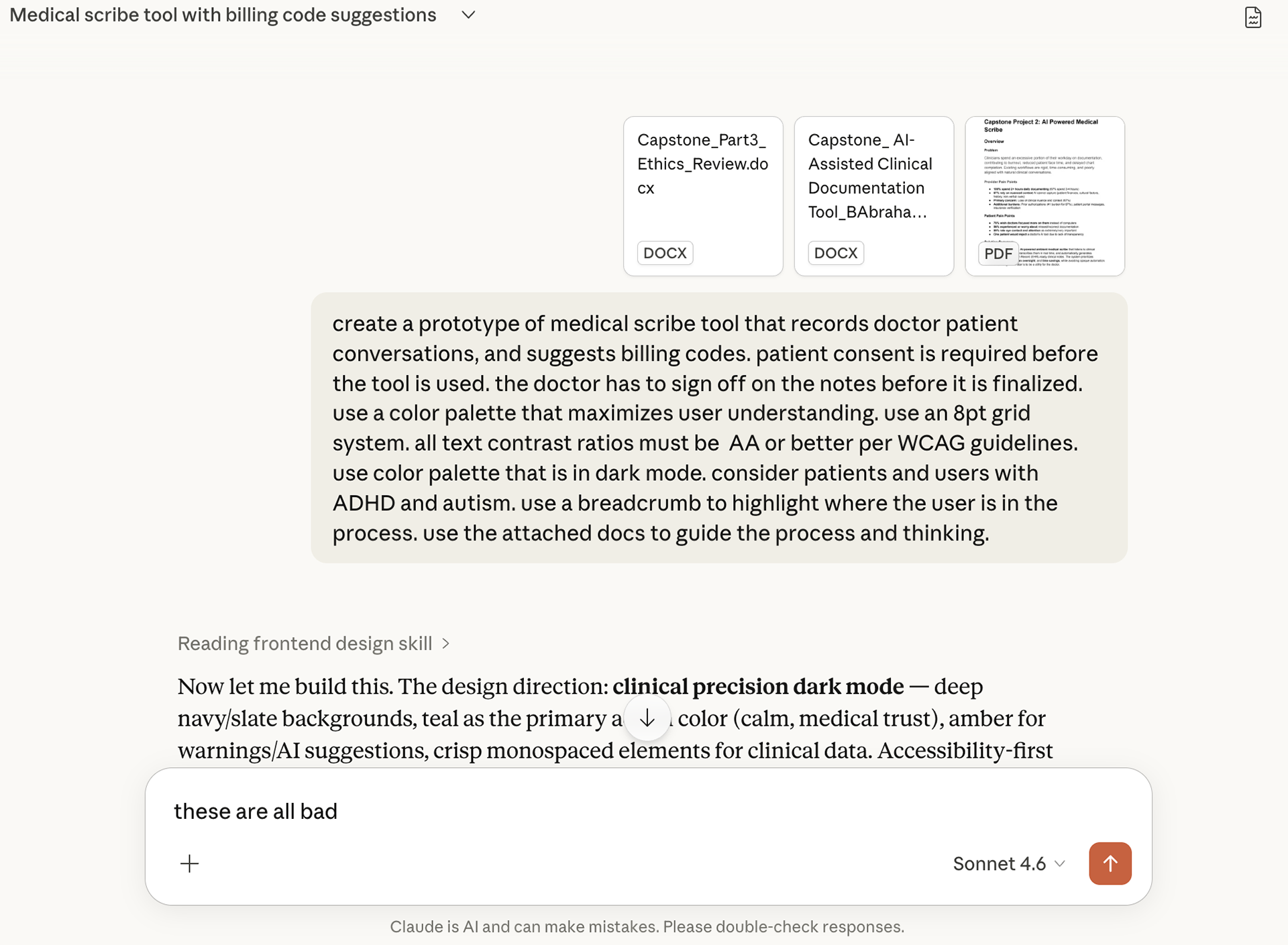
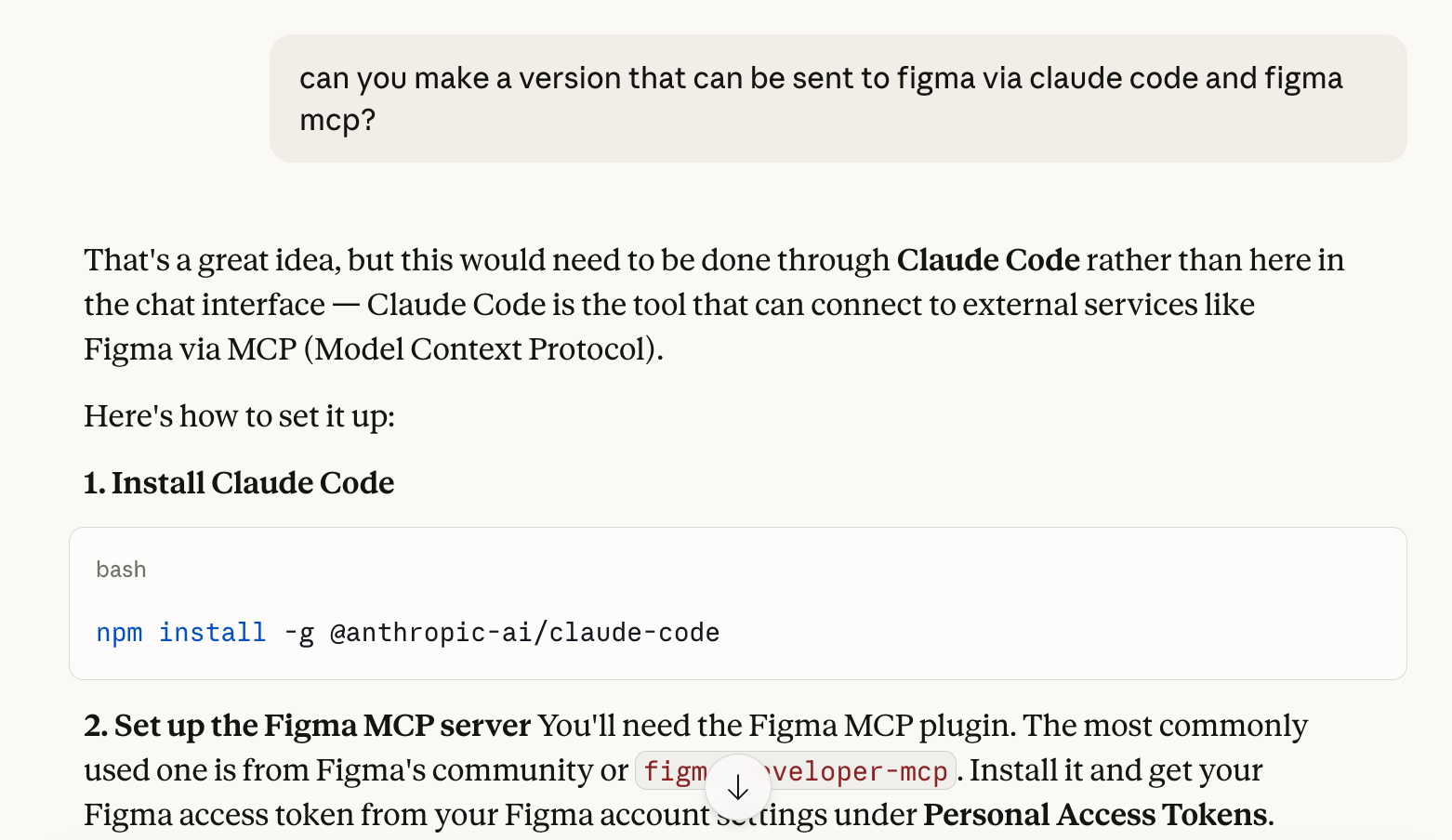
The main goal of the project was to test how AI could accelerate the design process itself. I experimented with a workflow using:
• Claude for concept ideation and UX logic
• Claude Code for generating front-end code
• Figma Make to convert the code into editable design components in Figma
• Claude Code for generating front-end code
• Figma Make to convert the code into editable design components in Figma
Design Principles
Through conversations with physicians and healthcare professionals, three priorities emerged.
1. Physician Control: Doctors must remain responsible for the final chart. AI can assist in drafting notes, but physicians must review and approve documentation before it becomes part of the medical record.
2. Patient Transparency: Patients must know when AI is involved in documentation. The system requires clear consent before recording or generating notes from a consultation.
3. Data Security: Healthcare documentation requires strict compliance with privacy regulations. The design prioritizes minimal data exposure, clear storage boundaries, and physician oversight before record submission.
The interface was designed with accessibility in mind. Key design choices included:
• dark mode by default to reduce eye strain
• breadcrumb navigation to support cognitive clarity and focus.
• minimal UI noise to support focused documentation
• 8-point grid system for consistent layout
• These decisions help maintain low cognitive load during clinical workflows.
• breadcrumb navigation to support cognitive clarity and focus.
• minimal UI noise to support focused documentation
• 8-point grid system for consistent layout
• These decisions help maintain low cognitive load during clinical workflows.
User research and findings
Results
The prototype successfully demonstrated that AI can significantly accelerate early-stage product design.
Key Takeaways
• AI can dramatically speed up prototype production
• Human designers remain essential for strategy and ethics as well as arbiters of what solutions best fit the problem–this has always been the fundamental purview of the designer and remains the case in the AI era.
• AI works best as a design accelerator, not a replacement
• This approach also improves the prototype and the developer handoff process, since the prototype already includes structured code and component layouts. However, the production workflow and creative decisions are best made by human designers.
• Human designers remain essential for strategy and ethics as well as arbiters of what solutions best fit the problem–this has always been the fundamental purview of the designer and remains the case in the AI era.
• AI works best as a design accelerator, not a replacement
• This approach also improves the prototype and the developer handoff process, since the prototype already includes structured code and component layouts. However, the production workflow and creative decisions are best made by human designers.